
Ar Ridho Islamic College Visits Muara Takus Temple
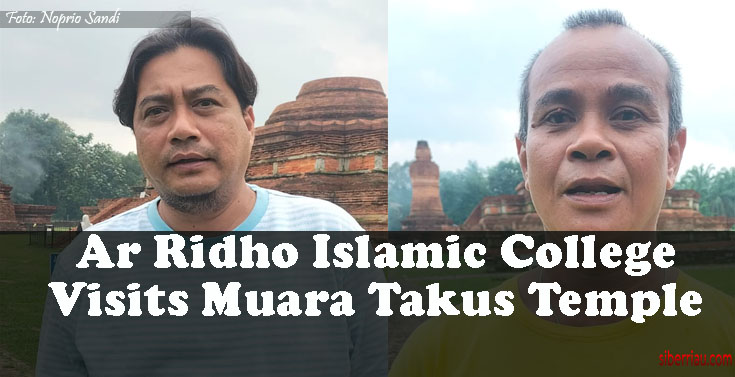
Bangkinang, Siberriau– The Ar Ridho Islamic College (STAI) in Bagansiapiapi visited the Muara Takus Temple Complex in Kampar. The visit aimed to learn about the history of scholarship, as the temple is believed to be the second Buddhist university in the world after Nalanda, India (now in Sri Lanka).
The visit, held on Sunday (January 11, 2026), involved students and academics. It was led by the Head of STAI Ar Ridho, Dr. Budi Setiawan, M.Pd., and a representative from the foundation, Yusnimar, SH.
Budi Setiawan explained that the visit was primarily to introduce history to students and the academic community, and to correlate existing scholarship, particularly related to the history of Buddhism and its transition to Islam.
As a progressive, green campus, Ar Ridho Bagansiapiapi Islamic Institute (STAI) deems it necessary to remember the scholarly history of Muara Takus Temple, as it is believed to have a rich scholarly history, as evidenced by its historical significance, becoming the second Buddhist university in the world.
Although the area was once a center for the development of Buddhist scholarship, its transition to a deeply Islamic region has become a special focus for Ar Ridho STAI.
Meanwhile, Zulkifli, the Caretaker of the Muara Takus Temple Complex, explained that I-Tsing, a Chinese Buddhist monk (7th century), an important travel writer who strengthened Srivijaya's role as an international center for Buddhist studies, is believed to have studied at the Muara Takus Temple Complex, which served as a university at the time. This university was the second university after Nalanda in India (now in Sri Lanka).
Consequently, Buddhist influence was very strong in the region at that time. However, with the arrival of Islam, the region's residents have now embraced Islam. A Buddhist tradition still ingrained today is Balimau Kasai, which means self-purification, and is performed by Muslims before the start of Ramadan.
Zulkifli added that, according to the records of Dutch author Cornelis de Groot, the Muara Takus Temple Complex consists of seven temples. Four are currently open to the public: Candi Tua, Candi Bungsu, Candi Mahligai, and Candi Palangka.
The other three temples have not been excavated and are currently under research. A Ganesha statue, a symbol of scholarship from the 7th century, was discovered in one of the temples and brought to Yogyakarta.
There, several generations of university students, including Fatih and his friends, were delighted to visit the area and gain knowledge. (Noprio Sandi).
- Pemkab Rokan Hulu Mantapkan Persiapan Penilaian Indeks Kualitas Kebijakan (IKK) Tahun 2026
- Perkuat Komitmen Cetak Atlet Disabilitas Intelektual Berprestasi
- Komisi III DPRD Dampingi Pemkab Kuansing Jemput Dukungan Infrastruktur Digital di Kementerian Komdigi
- Kepala Puskesmas Tanah Putih Yusriani, SKM Gerakkan Kampanye Hidup Sehat dan Sukseskan GERMAS
- Aisya Fhatih Az-Zahra Kunjungi STAI Ar-Ridho Bagansiapiapi
- STAI Ar-Ridho Bagansiapiapi Gelar Pembekalan Dosen dan Mahasiswa KKN-PPL Angkatan XIV
- 18 Gasing dan 54 Layang Ikuti Lomba Permainan Anak Negeri Sempena Hari Jadi ke-514 Bengkalis

siberriau.com adalah Situs berita riau terkini, media online yang melayani informasi dan berita dengan mengutamakan kecepatan serta kedalaman informasi. Portal berita ini selama 24 jam dalam sepekan selalu update, dan secara kreatif mengawinkan teks, foto, video dan suara dan kami fokus pada pembaca di Indonesia dan Riau khususnya, baik yang berada di tanah air maupun yang tinggal di luar negeri. Selengkapnya

Quick Links
Kanal
Alamat Perusahaan
Perumahan Pesona Alam Pandau Blok Sakura 1 Nomor 7 RT 02 RW 04
Dusun V Sei Tangon Permai Desa Pandau Jaya Kecamatan Siak Hulu Kabupaten Kampar Provinsi Riau
Alamat Redaksi
Perumahan Pesona Alam Pandau Blok Sakura 1 Nomor 7 RT 02 RW 04
Dusun V Sei Tangon Permai Desa Pandau Jaya Kecamatan Siak Hulu Kabupaten Kampar Provinsi Riau