
Poverty and its Management
Noprio Sandi
Editor-in-Chief of siberriau.com
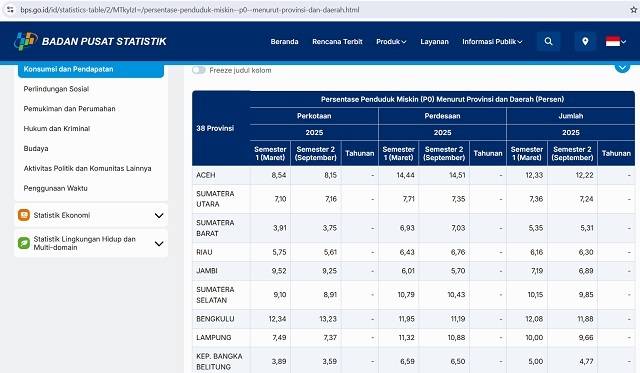
Based on the Percentage of the Poor Population (PO) by Province and Region (Percent), in 2025 for 38 provinces, the urban population was 6.73 percent (semester 1 (March)), 6.60 percent (semester 2 (September)), the rural population was 11.03 percent (semester 1 (March)), 10.72 percent (semester 2 (September)), and the total population was 8.47 percent (semester 1 (March)), and 8.25 percent (semester 2 (September)). Specifically for Riau Province, urban population 5.75 percent (semester 1 (March)), lower than national, 5.61 percent (semester 2 (September)), lower than national, rural population 6.43 percent (semester 1 (March)), lower than national, 6.76 percent (semester 2 (September)), lower than national, total 6.16 percent (semester 1 (March)), lower than national, 6.30 percent (semester 2 (September)), lower than national (BPS, 2026).
Based on these data, Riau Province still has a low poverty rate compared to the national average. The percentage of poor people in urban and rural areas is nearly equal. This indicates that, despite being sparsely populated in rural areas, the percentage is nearly the same as in denser urban areas. It turns out that urban population density does not significantly impact poverty rates, but remains nearly equal to that of rural areas.
Poverty is a multidimensional issue related not only to economic constraints but also to limited access to education, health, and social participation (Idris, 2026). These three crucial limitations in access are also experienced by Riau Province: education, health, and social participation in both urban and rural areas remain suboptimal. Social media posts have shown that students have to cross rivers, schools are in poor condition, and teachers are lacking in staff and are not well-off. Also frequently posted are images of disappointing health services, doctors going on strike because local governments cannot afford their salaries, and people simply resigning themselves to their illnesses due to a lack of treatment. Then, there are also frequent complaints about the lack of social participation from companies to the rich towards the poor, both in urban and rural areas.
The author heard a housewife entrusting her groceries to a neighbor in the morning. She only asked for curry spices for Rp3,000. The neighbor, who was going to the market, commented that nowadays, where can you find curry spices for Rp3,000, but at least Rp5,000? Their conversation illustrates how difficult it is for residents to find food these days. It was discovered that the housewife who entrusted the groceries to her has three sons, two of whom have dropped out of school. Their income is uncertain, and sometimes the two dropouts visit the homes of residents around the housing complex, offering to sell corn or harvested fruit, and sometimes even buy from farmers. These dropouts are considered by the local community to be troublesome children, stigmatized as children who often steal, especially since the residents' homes are empty. They don't go to school if they are sick and receive minimal treatment, and there is a lack of social participation from the local community. One of these children heard that his neighbor had an accident, breaking his leg and needing snakehead fish for recovery. This child took this opportunity to fish for snakehead fish. He's caught snakehead fish in peatlands several times and sold them to a neighbor with a broken leg. Sometimes he earns Rp 80,000, sometimes Rp 70,000. This money is undoubtedly invaluable for supporting his family's finances.
Behind this family's plight, a red motorcycle is parked in front of their house, still in disrepair. The house, already in disrepair, faces monthly installments for this motorcycle. The exact amount of these installments is unknown, but the family must work hard and save to meet the loan payments. If they don't pay, they'll be ready for debt collectors to come to their house and take the motorcycle. Many people are currently trapped in this leasing situation.
Therefore, it is deemed necessary to reconstruct the handling of the poor through various means, including reinterpreting the handling process. Reconstruction is a re-arranging (re-imagining), reinterpretation is a re-interpretation; the process, methods, and actions of reinterpreting existing interpretations (Language Development and Fostering Agency, 2016).
Poverty is the pockmarked face of a country that has failed to distribute justice equitably, and it is also the most visible indicator of deep-rooted structural inequality. Even though Article 34 Paragraph (1) of the 1945 Constitution imperatively mandates that "the poor and neglected children are cared for by the state", empirical reality shows a painful paradox, namely that this constitutional mandate has not been fully realized in policy practice (Herdiana et al., n.d.).
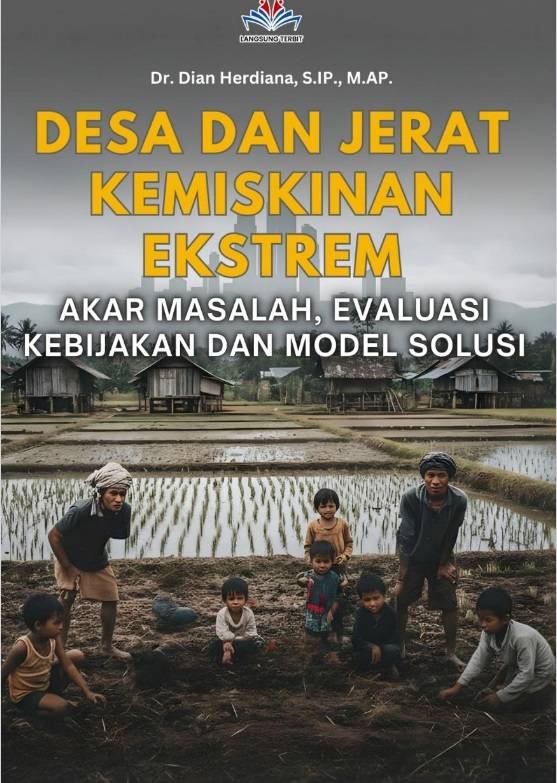
This article attempts to examine how, after 76 years of republican independence, the handling of the poor and neglected children is being implemented. How does the State Budget (APBN) address the issue of poverty? How effective are government programs in realizing this noble and lofty constitutional mandate?
Referring to these various facts, the government consistently strives to address poverty and neglected children, as mandated by the country's constitution, every year through various APBN policies, despite fiscal constraints. These government efforts sometimes yield positive results, such as a decrease in the number of people living below the poverty line, but sometimes they are less effective due to various factors, such as the worsening global and domestic economy, the emergence of unforeseen external factors such as the COVID-19 pandemic or geopolitical escalations.
Ultimately, we recognize that the mandate to address poverty and neglected children remains a significant task, fraught with numerous challenges. Therefore, various social protection programs must continue to be promoted to increase their effectiveness, both in terms of increasing their budget allocations and ensuring the effectiveness and accuracy of their implementation. Planning and coordinating the implementation of various social protection programs must be a focus of the government going forward, as a way of fulfilling the constitutional mandate and upholding the noble and honorable legacy of the nation's founders (Arief Masdi, n.d.).
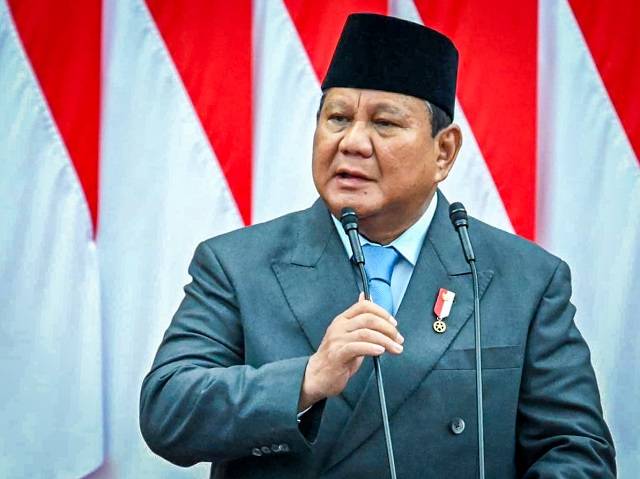
President Prabowo Subianto emphasized his government's commitment to combating poverty through a holistic approach. One effort to break the cycle of absolute poverty is through education, through the establishment of public schools. The government has built and opened 100 public schools for people from the lowest decile (BPMI Setpres, 2025).
For example, the construction of a public school in Kuantan Singingi Regency, Riau Province, using an integrated and free scheme, is underway and is targeted for completion in July 2026, ensuring full operation by the 2026/2027 academic year. And the presence of public schools is expected to be a concrete solution in expanding access to quality education for underprivileged communities (Advertorial Kominfo Kuansing/Zar, 2026).
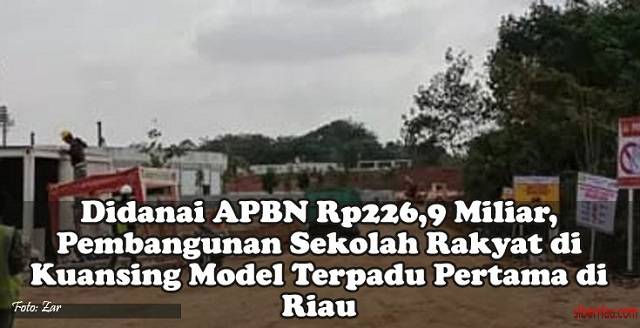
While various efforts have been made, the reality on the ground shows that the community remains impoverished. Education, health care, and social awareness have been improved, and development programs have been directed, yet the trap of usury (riba) has received little attention. The author believes that another emphasis in reconstructing the poor is reconstructing the community's mentality so that they are less tempted by the desire to own motor vehicles and are cautious about taking out loans from conventional banks and loan sharks. The author witnessed in a housing complex that almost all residents were ensnared by loan sharks. Almost all residents are also trapped by bank loans, almost all loans from motor vehicles, housing, and so on, as well as online loans (pinjol). This is all usury that indirectly sucks the lifeblood of the community. No matter how solid government programs are, people must bear the burden of high interest rates throughout their lives, making economic improvement impossible. The author observed a married couple with master's degrees who still appear poor, a healthy family who also appears poor, and despite the high social awareness of the community and surrounding companies, the community remains poor.
Therefore, the author recommends reconstructing and reinterpreting the handling of the poor by combating usury on a massive scale. Dumai Mayor Paisal has set an example by prohibiting his employees from borrowing from banks or using any form of usury, including motor vehicle loans. Superiors are prohibited from granting permission. This step is worthy of emulation by all local governments, including local governments, who should refrain from borrowing from banks for government financing.
References
Advertorial Kominfo Kuansing/Zar. (2026). Didanai APBN Rp226,9 Miliar, Pembangunan Sekolah Rakyat di Kuansing Model Terpadu Pertama di Riau. Siberriau.Com. https://www.siberriau.com/read-8126-2026-03-13-pembangunan-sekolah-rakyat-di-kuansing-model-terpadu-pertama-di-riau.html
Arief Masdi. (n.d.). Melacak Penanganan Kebijakan Fakir Miskin. Kemenkeu.Go.Id. https://anggaran.kemenkeu.go.id/in/post/melacak-kebijakan-penanganan-fakir-miskin
Badan Pengembangan dan Pembinaan Bahasan. (2016). Rekonstruksi. Kemendikdasmen. https://kbbi.kemendikdasmen.go.id/entri/rekonstruksi
BPMI Setpres. (2025). Presiden Prabowo Tegaskan Perangi Kemiskinan dengan Pendekatan Holistik. Menpan.Go.Id. https://www.menpan.go.id/site/berita-terkini/berita-daerah/presiden-prabowo-tegaskan-perangi-kemiskinan-dengan-pendekatan-holistik
BPS. (2026). Persentase Penduduk Miskin (P0) Menurut Provinsi dan Daerah (Persen), 2025. BPS. https://www.bps.go.id/id/statistics-table/2/MTkyIzI=/persentase-penduduk-miskin--p0--menurut-provinsi-dan-daerah.html
Herdiana, D., IP, S., & AP, M. (n.d.). DESA DAN JERAT KEMISKINAN EKSTREM: AKAR MASALAH, EVALUASI KEBIJAKAN DAN MODEL SOLUSI.
Idris, M. K. (2026). Redefinisi Fakir–Miskin dan Zakat Produktif sebagai Instrumen Pemberdayaan Ekonomi di Indonesia. Tasfiyah: Journal of Islamic Law and Sharia Economics, 2(1), 1–12.
- Perkuat Komitmen Cetak Atlet Disabilitas Intelektual Berprestasi
- Komisi III DPRD Dampingi Pemkab Kuansing Jemput Dukungan Infrastruktur Digital di Kementerian Komdigi
- Aisya Fhatih Az-Zahra Kunjungi STAI Ar-Ridho Bagansiapiapi
- STAI Ar-Ridho Bagansiapiapi Gelar Pembekalan Dosen dan Mahasiswa KKN-PPL Angkatan XIV
- 18 Gasing dan 54 Layang Ikuti Lomba Permainan Anak Negeri Sempena Hari Jadi ke-514 Bengkalis
- LAMR Gelar Sepekan Kenduri Adat Penuh Warna dan Budaya
- Plt Bupati Kuansing Jagokan Argentina Juara Piala Dunia 2026

siberriau.com adalah Situs berita riau terkini, media online yang melayani informasi dan berita dengan mengutamakan kecepatan serta kedalaman informasi. Portal berita ini selama 24 jam dalam sepekan selalu update, dan secara kreatif mengawinkan teks, foto, video dan suara dan kami fokus pada pembaca di Indonesia dan Riau khususnya, baik yang berada di tanah air maupun yang tinggal di luar negeri. Selengkapnya

Quick Links
Kanal
Alamat Perusahaan
Perumahan Pesona Alam Pandau Blok Sakura 1 Nomor 7 RT 02 RW 04
Dusun V Sei Tangon Permai Desa Pandau Jaya Kecamatan Siak Hulu Kabupaten Kampar Provinsi Riau
Alamat Redaksi
Perumahan Pesona Alam Pandau Blok Sakura 1 Nomor 7 RT 02 RW 04
Dusun V Sei Tangon Permai Desa Pandau Jaya Kecamatan Siak Hulu Kabupaten Kampar Provinsi Riau